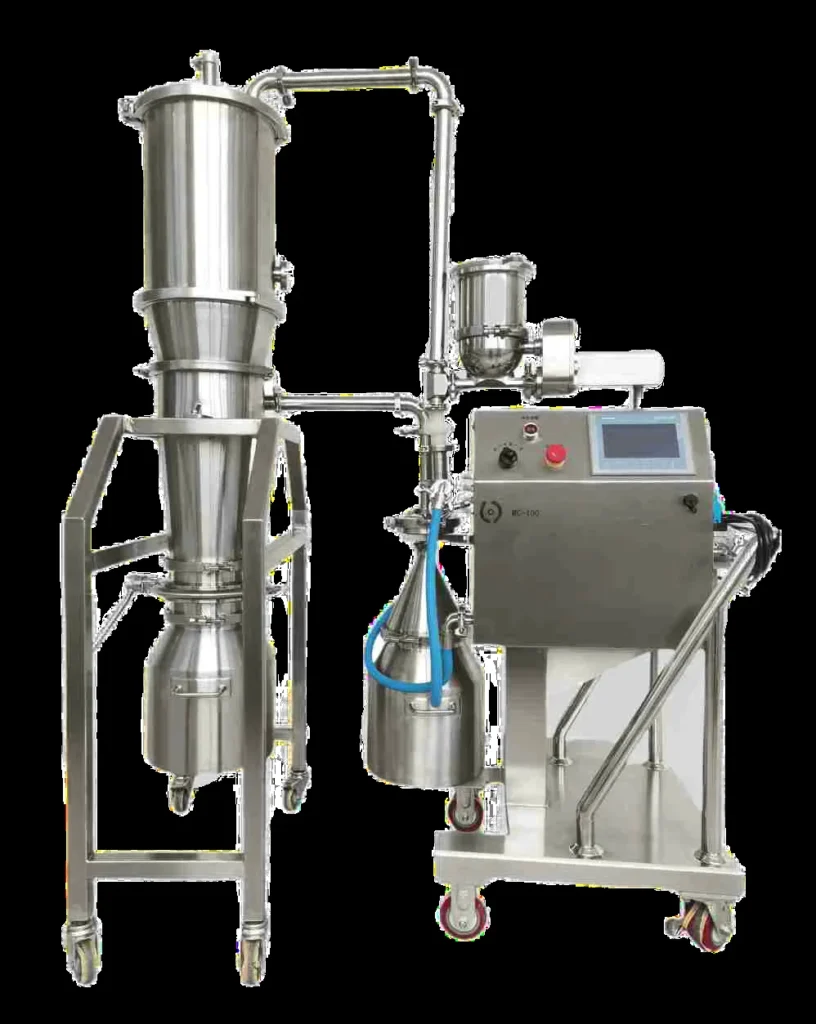
Model: MC-50 – MC-400
Benelabo jet mills (MC series, six models MC-50 to MC-400) grind brittle, crystalline and heat-sensitive materials to 1–30 μm using only high-speed airflow energy — no heat build-up, no moving parts in the mill chamber, no dust release — from 0.035 kg/h trials to 250 kg/h production, batch modes from 1.5 g.
Highlights
Energy comes from expanding air and particle-on-particle impact — no hot surfaces, safe for heat-sensitive APIs.
Feed, milling, collection and extraction run sealed; clean air exhausts through the filter stage.
MC-50 covers gram batches; MC-400 scales to 250 kg/h on the same chamber principle.
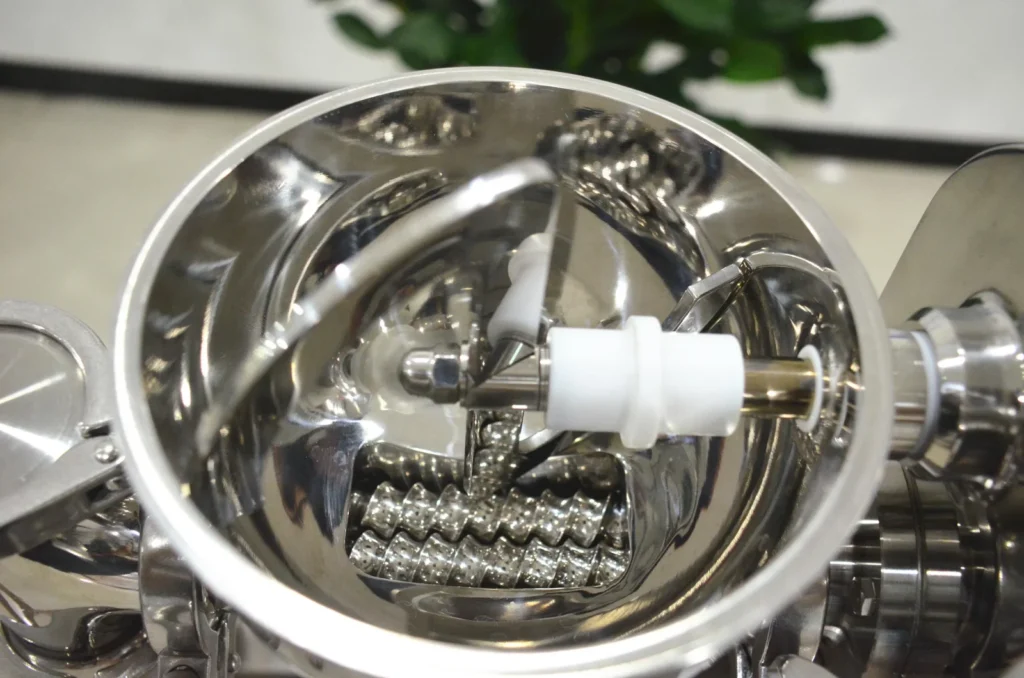
Pair the twin-screw feeder for micronized, electrostatic or fluffy feeds — stable linear dosing into the venturi.
Applications
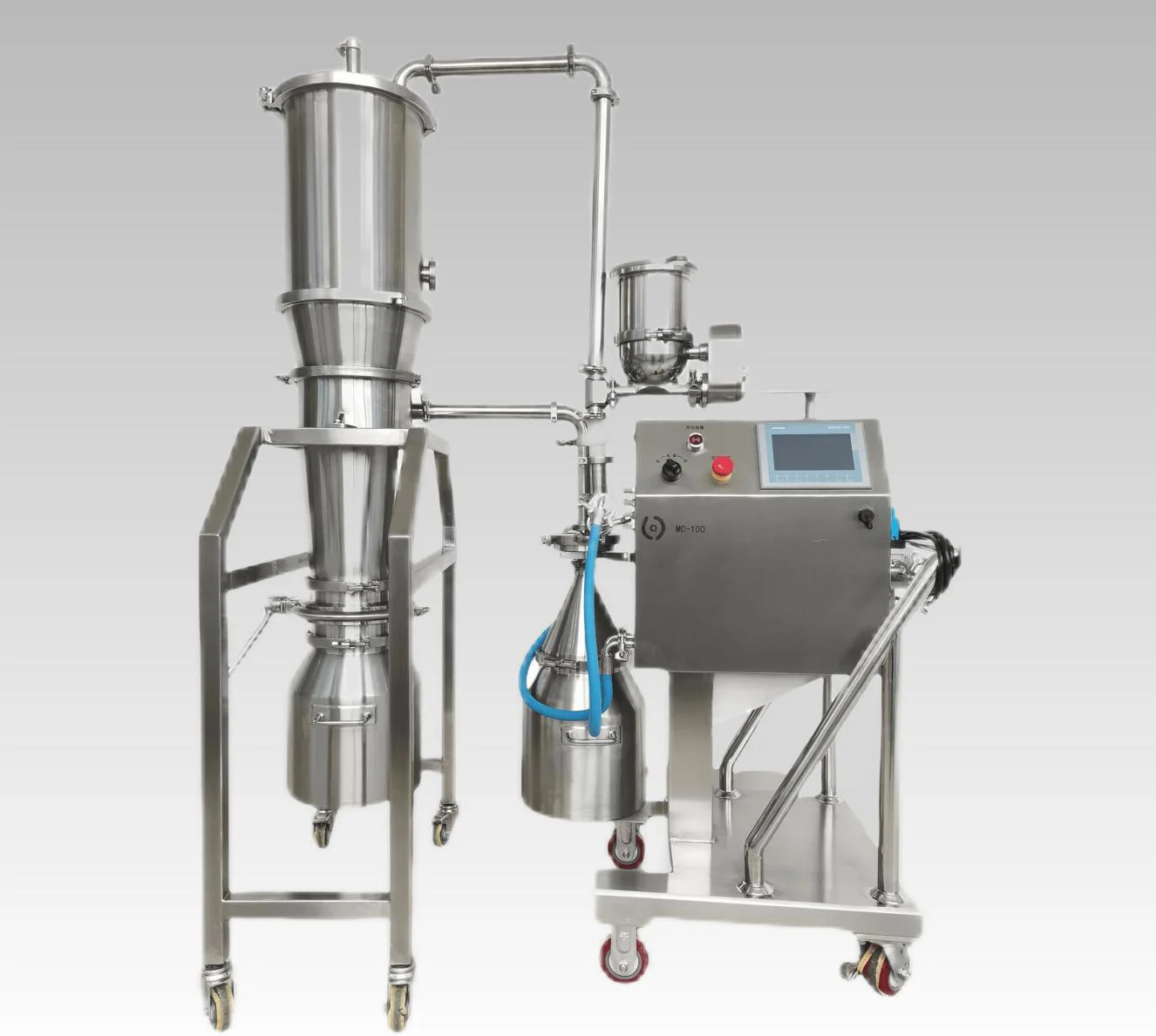
- API micronization for heat-sensitive and crystalline actives
- Excipient particle size control
- Chemical and food fine grinding
- Lab-to-production scale-up via the S-LAB path
Real-scene, company and exhibition photos are being curated for this page — available on request meanwhile: info@benelabos.com.
How a Jet Mill Works
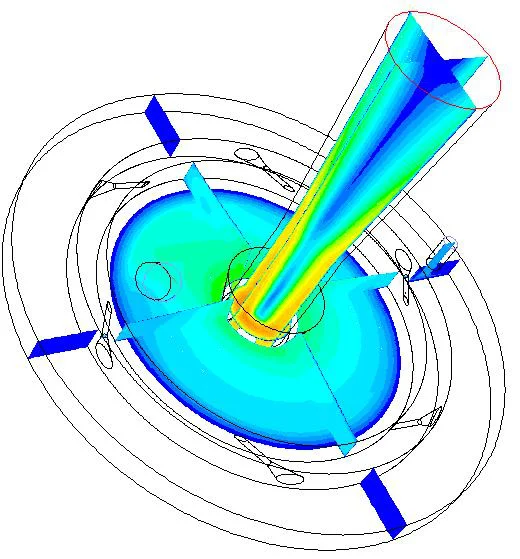
Pre-milled feed (typically below 1–2 mm) is dosed by a twin-screw feeder into a venturi. The particles enter a flat spiral chamber where expanding air at 6–10 bar accelerates them along the chamber wall; size reduction comes purely from particle-on-particle impact and shear — there is no grinding media and no hot surface. Centrifugal force keeps coarse particles at the outer rim for further reduction while fines migrate to the center and exit to the integrated filter/collection stage, giving a narrow, reproducible distribution between 1 and 30 μm.
English-labeled jet mill process flow diagram (twin-screw feed → spiral milling chamber → classification → cyclone collector) is being prepared and will be published here. The annotated drawing is available on request meanwhile — write to info@benelabos.com.
Choosing Your Model
Size the chamber by batch and rate, not by target fineness — every MC model reaches the same 1–30 μm window. MC-50 covers feasibility and gram-scale samples; MC-100 to MC-200 cover R&D and pilot lots; MC-300 and MC-400 deliver 5–250 kg/h for production. Air consumption scales with chamber size, so check your compressed-air capacity for continuous running — the full per-model air demand is listed in the specification table below.
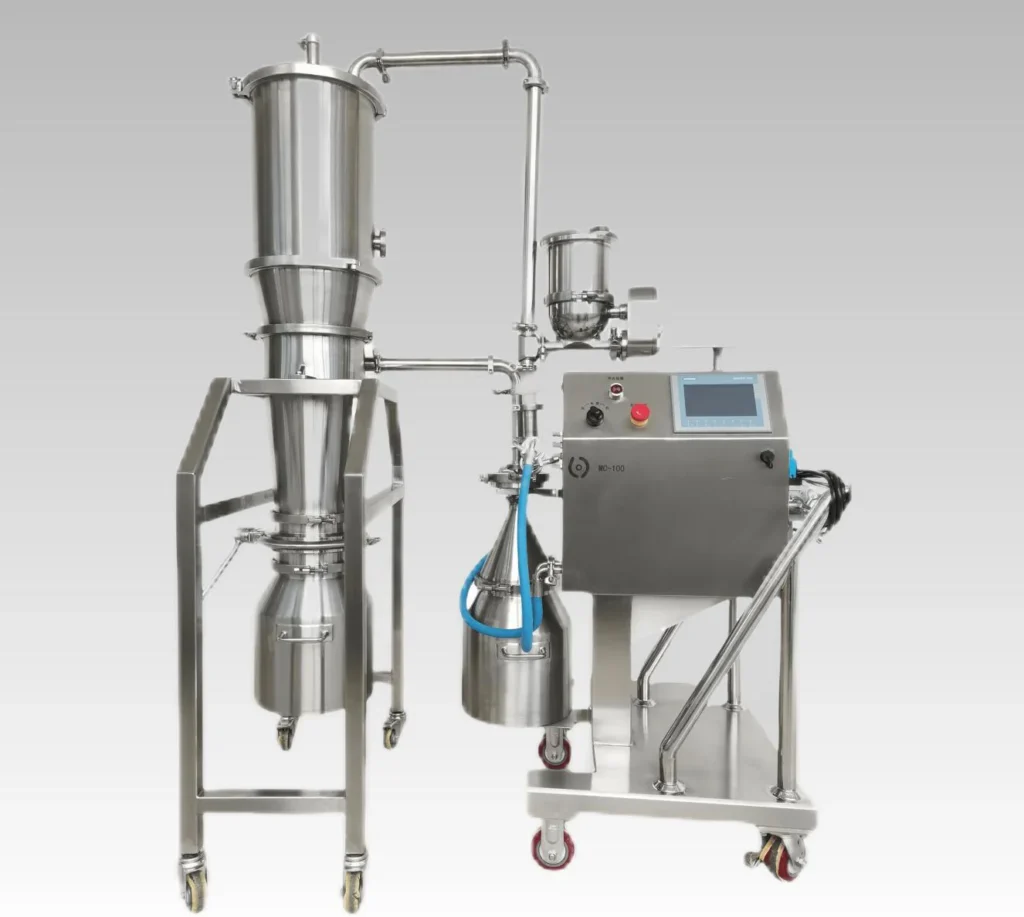
Product Images
Full Specifications
| Model | Nominal dia. mm | Capacity kg/h | Batch kg/batch | Air Nm³/min @7bar | Evidence |
|---|---|---|---|---|---|
| MC-50 | 50 | 0.035–0.2 | 0.0015–0.5 | 0.2 | Manufacturer spec |
| MC-100 | 100 | 0.05–4 | 0.05–5 | 0.42 | Manufacturer spec |
| MC-150 | 150 | 0.5–20 | 0.2–15 | 0.73 | Manufacturer spec |
| MC-200 | 225 | 0.5–35 | 1–500 | — | Manufacturer spec |
| MC-300 | 300 | 5–150 | 5–1000 | — | Manufacturer spec |
| MC-400 | 450 | 5–250 | 5–1500 | — | Manufacturer spec |
How to Choose
Match the MC chamber to your batch, not your ambition. Gram-to-500 g feasibility runs on the MC-50 (0.0015–0.5 kg); pilot parameter locking on the MC-100/150 (0.05–5 kg); production from 5 to 250 kg/h on the MC-300/400. Same spiral principle across the ladder — distributions transfer upward.
- Lab / feasibilityMC-50 — 50 mm chamber, 0.035–0.2 kg/h, batches 0.0015–0.5 kg
- Pilot / process lockMC-100 · MC-150 — 0.05–20 kg/h, batches to 15 kg — where d50 targets are locked
- ProductionMC-200 · MC-300 · MC-400 — 1–1,500 kg batches, 5–250 kg/h continuous
Where this sits: Micronization is one stage of the powder train — pair with the Twin-Screw Powder Feeder for cohesive feeds, or step down to the Hammer Mill when a coarse cut is enough.
Pain Points This Solves
Energy comes from expanding air and particle-on-particle impact — no hot surfaces, safe for heat-sensitive APIs.
Sealed feed-to-extraction closed loop; clean air exhausts through the filter stage.
MC-50 gram batches to MC-400 at 250 kg/h run on the same chamber principle.
Ordering & Trade Details
| Item | How it works at Benelabo |
|---|---|
| Customization | MC family from lab (MC-50) to production (MC-400); paired twin-screw feeder sized to your powder’s flowability. |
| Sampling | Mill your own material and read the real distribution — trials from grams, before committing to a production chamber. |
| Quotation & lead time | Send your machine model, process and capacity — engineers reply within 24 business hours; pricing and lead time are confirmed on the proforma invoice. |
| Payment & shipping | Payment terms and shipping Incoterms are agreed on the proforma invoice; export-grade packing with packing list and commercial invoice as standard. |
| Documentation | Particle-size distribution report from your trial plus manufacturer spec sheets with the machine. |
How We Work
Send material, process and capacity — a named engineer replies within 24 business hours.
Target d50 and distribution tested on your powder; model and feeder configuration fixed from the trial.
Built and tested against the agreed spec — FAT evidence before shipment.
Export packing, installation guidance and spare-part supply from the same factory.
Request sizing & a quote for Jet Mill →
FAQ
Which mill gives 1–30 μm?
The spiral jet mill — airflow energy drives self-impact with no hot surfaces. MC-50 runs gram batches; MC-400 scales to 250 kg/h.
Does jet milling cause thermal degradation?
No. Expanding air provides energy and cooling, and the chamber has no moving grinding surfaces.
Jet mill or hammer mill for my powder?
Jet mill for ≤30 μm and heat-sensitive duties; hammer mill for 25–200 μm at higher throughput — decision table in our articles section.
What feed size and feeding does a jet mill need?
Feed should be pre-milled to roughly 1–2 mm and dosed consistently — cohesive, micronized or fluffy powders are best fed by the twin-screw feeder, which gives stable linear dosing into the venturi without bridging.
How is the powder collected and is there dust exposure?
The loop runs sealed: mill, cyclone and filter stage recover the fines in a closed circuit, and exhaust air passes the filter before release — no dust release to the operator area.
Related Products
Two-/three-fluid guns, φ0.6–1.2 mm — retrofit to existing fluid beds.
5-in-1 granulation, Wurster coating, pelletizing, layering, drying.
Solvent-free fluid bed coating, mini to production scale.
Plant-based, ≤3% moisture, sizes 00–4, trials from 1,000 pcs.
Explore the full range: Powder Processing →
Ready to verify on your material?
Send your formulation and target spec — a test plan and quotation come back typically within one working day.