FSZ pin mills grind crystalline materials and APIs to D90 ≤5 μm across four sizes (4–11 kW) — high-speed pin-ring impact for heat-sensitive, narrow-distribution milling.
Highlights
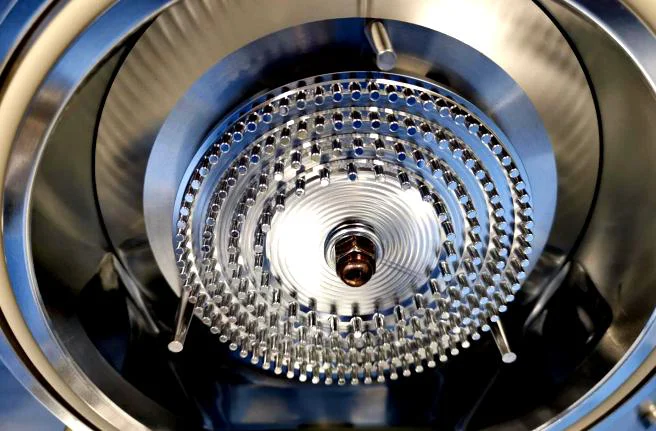
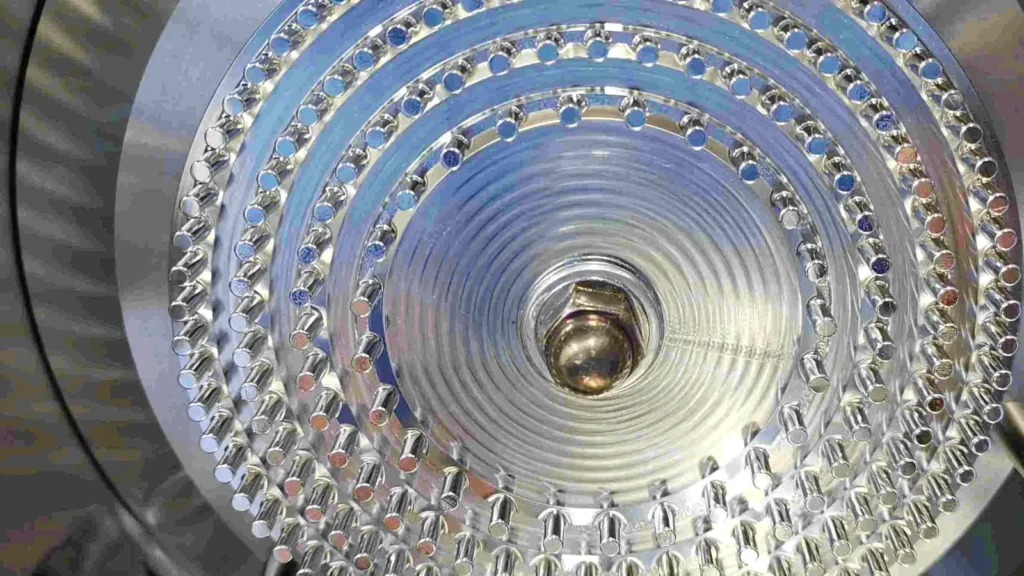
Pin-ring geometry grinds crystalline materials and API blends to ultra-fine, narrow distributions.
High-speed impact with optional cooling keeps sensitive APIs stable.
FSZ-120 to 320 scale the same pin-disc chamber from lab to production.
Applications
- API and excipient fine milling
- Herbal and crystalline grinding
- Pre-milling before jet milling
Product Images
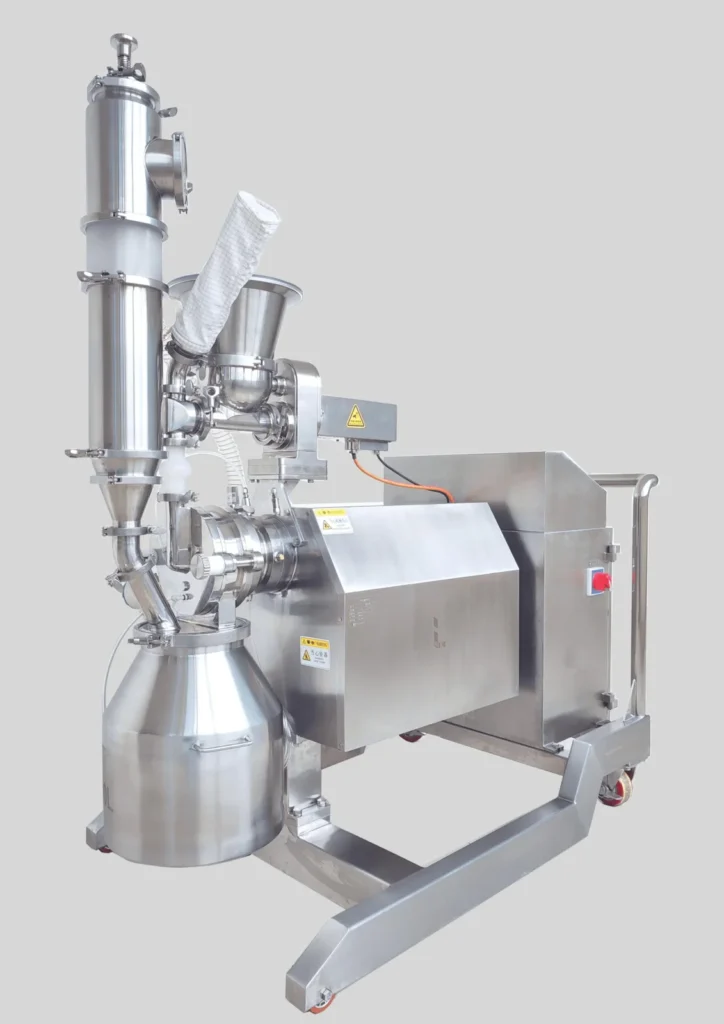
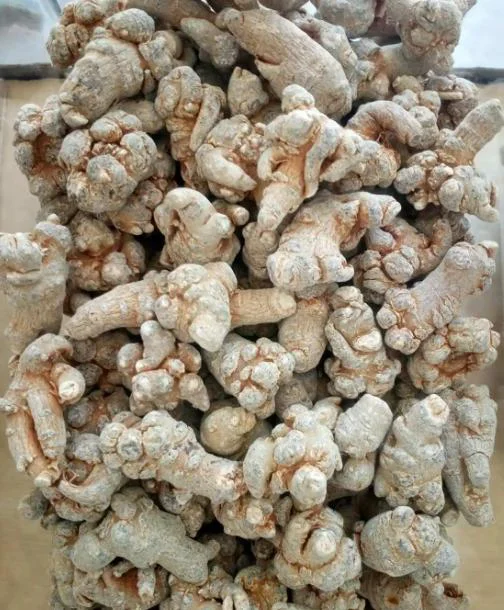
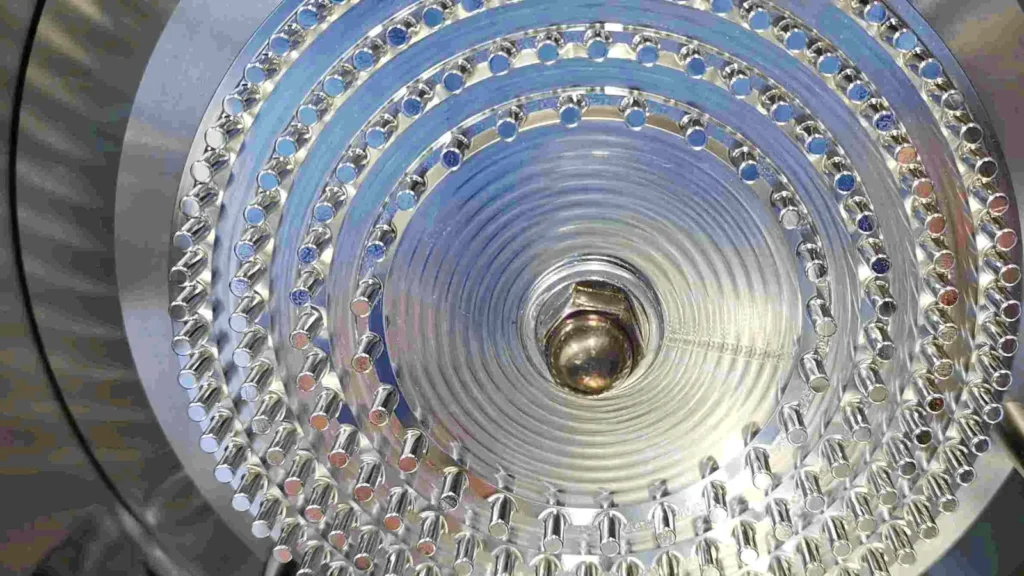
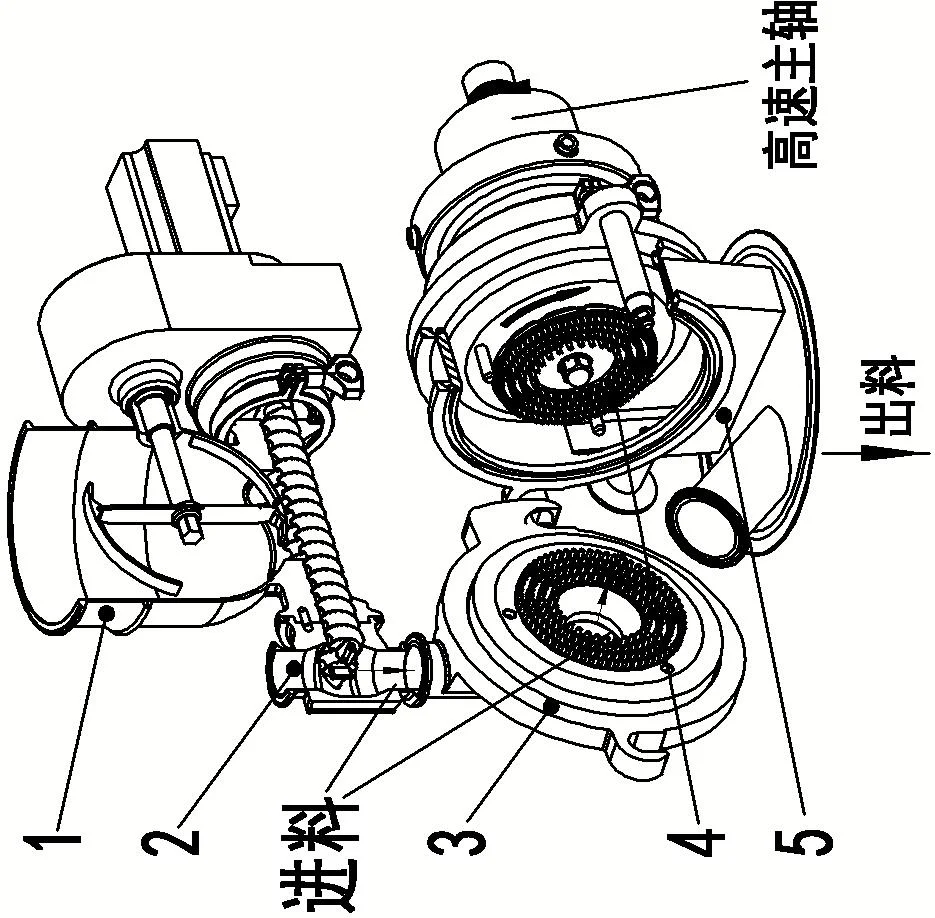
Full Specifications
| Model | Rotor power | Note | Evidence |
|---|---|---|---|
| FSZ-120 | 4 kW | lab / small batch | Manufacturer spec |
| FSZ-160 | 5.5 kW | pilot | Manufacturer spec |
| FSZ-240 | 7.5 kW | production | Manufacturer spec |
| FSZ-320 | 11 kW | production, high throughput | Manufacturer spec |
FAQ
How fine can a pin mill grind crystalline pharmaceutical powders?
Down to D90 5 μm depending on material brittleness and feed rate — the rotor/stator pin rows run at up to 24,000 r/min (200 m/s line speed) on the FSZ-120.
Pin mill vs jet mill for 5–50 μm: which is more economical?
Pin mills grind to about 5 μm at much lower air consumption; jet mills go finer (1–30 μm) with zero heat from friction surfaces. For 5–50 μm at throughput, the pin mill is usually the economical choice — see the comparison article in /articles/.
Is pin milling suitable for heat-sensitive API?
Yes — grinding is by impact, not friction, and closed air flow carries away heat; feed rate is the main control parameter.
Related Products
Two-/three-fluid guns, retrofit to existing fluid beds.
Solvent-free coating, mini to production.
5-in-1 granulation to DPL-200.
1–30 μm, 0.035–250 kg/h.
Explore the full range: Powder Processing →
Request sizing & a test plan
Send your material, process and capacity — engineers reply within one working day.