The Wurster process coats particles from about 10 microns up to 2–3 mm pellets in a bottom-spray fluid bed, where a partition tube separates the up-bed spray zone from the down-bed drying zone. The spray gun is the heart of that process: this guide explains how a Wurster gun differs from a top-spray gun, how to size nozzle and air-cap for your batch, and the failure modes to design out before they cost you a batch.
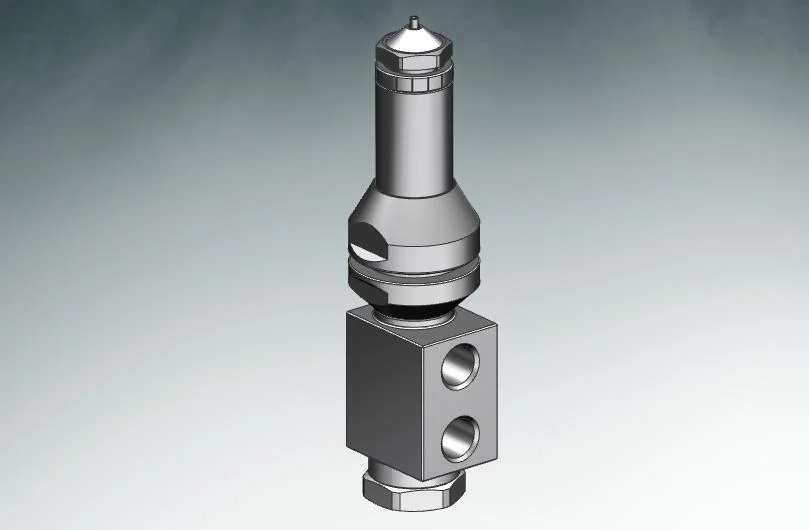
Why the Bottom-Spray Gun Is Different
In a Wurster insert, particles accelerate upward through a narrow partition at high velocity, pass the nozzle in a fraction of a second, and fall back as a slow down-bed outside the partition. The gun must therefore deliver a fine, highly uniform spray pattern into a very short exposure window — droplets that are too large over-wet and gum the partition mouth, droplets that are too fine drift with the air and miss the target. That is why Wurster guns use narrower nozzle bores (typically φ0.6–1.0 mm), higher atomizing-air pressure and a protective-air collar that keeps the nozzle tip clear of recoating material.
Gun Selection by Process Stage
| Stage | Batch / bed size | Recommended gun set | Nozzle bore |
|---|---|---|---|
| Lab feasibility | 0.2–5 kg beds | Single gun, Ⅰ-type, quick-change tips | 0.6–0.8 mm |
| Pilot | 5–30 kg | Single gun, Ⅱ-type with extended insulating shank | 0.8–1.0 mm |
| Production partition | 30 kg and up, multi-partition inserts | Multi-gun sets, matched spray-pattern calibration | 0.8–1.2 mm |
The six Benelabo Wurster bottom-spray gun models (Ⅰ–30A series) follow this ladder, and every gun body shares the same no-weld, fully detachable construction so tips and air caps can be swapped or inspected without tools.
Sizing Nozzle and Air: The Three Numbers That Matter
- Droplet size — set mainly by atomizing air pressure and liquid viscosity; target droplets well below the particle size so films build in thin layers
- Spray flux — liquid rate divided by spray footprint; the partition width and gun height set the footprint, so gun-to-partition geometry is part of the selection, not an afterthought
- Tip clearance temperature — the protective air collar and (for hot melts) a heated gun body keep the tip above the film-forming point; a cooled tip is the first step toward partition mouth fouling
Failure Modes to Design Out
Most Wurster coating stoppages trace back to the gun zone: tip caking from recoating material, spray pattern distortion after a tip chip, or condensation on a cold gun body in aqueous duty. Each is addressed at the design stage — see our spray gun clogging guide for causes and fixes. For solvent-free duties, the same gun platform extends into the hot melt spray coating set with heated body and heated lines.
From Trial to Production on One Gun Family
Because the nozzle family and air-cap logic stay constant across bed sizes, a coating process locked at lab scale transfers upward with the gun geometry intact — the same rule that governs the whole Benelabo spray system: 36 models across 7 series. Gun configurations can be verified on your own product before purchase; here is how a trial runs.
FAQ
What particle size range suits Wurster coating?
Fine powders around 10 microns up to 2–3 mm pellets — the partition geometry and gun set are chosen to match the particle class.
Can a Wurster gun be retrofitted to another brand’s fluid bed?
The gun set (body, tip, air cap, insulation) is dimensioned to the partition and bowl — send your machine model and bowl size for a matched configuration; compatibility is confirmed per machine before quoting.
Why does my Wurster gun keep caking at the tip?
Recoating material condensing on a tip that has dropped below the film-forming temperature — check protective air flow, tip immersion depth and (for hot melts) the heated gun body; the full cause list is in the clogging guide.
Get a Wurster gun set sized to your bed
Send machine model, batch and liquid — configuration and quotation within one working day.
Related reading